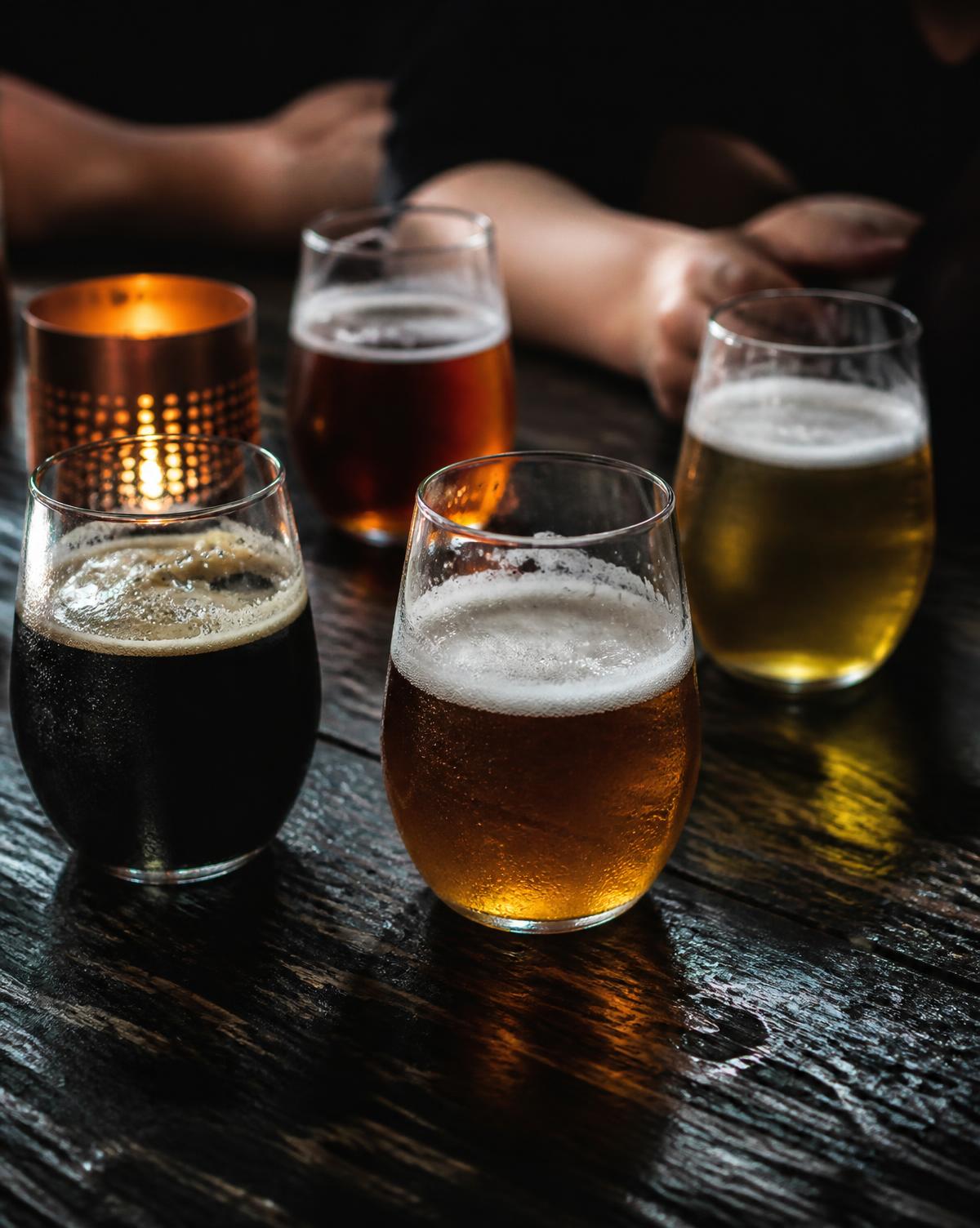
Poland has two beers the rest of the world doesn't
Most craft beer scenes are variations on the same global playbook: IPA, pastry stout, fruited sour, repeat. Poland plays that game too, and plays it well. But it also has two styles that are genuinely, historically its own — and knowing them changes how you read a Polish tap list.
Porter Bałtycki — the national treasure
Baltic Porter is a strong, dark, malty beer: reddish-copper to deep brown, with a thick tan head and a flavour built on caramel, toffee, nuts, liquorice, dark chocolate and dried fruit — plums, prunes, raisins, cherries — with a roasted depth that stops short of burnt. Most commercial examples sit between 7% and 8.5% ABV, and the best of them hide that strength almost completely.
The style descends from the strong English porter shipped around the Baltic in the 18th and 19th centuries; Gdańsk was one of the key ports in that trade. Polish brewers kept the tradition alive through the 20th century when it faded almost everywhere else — Żywiec Porter, at 9.5%, has been brewed since 1881. Today Polish versions tend to be bigger and thicker than American ones, and Poland is consistently regarded as the world's best source for the style.
It even has a holiday. Baltic Porter Day has been celebrated on the third Saturday of January since 2016, and by 2024 it had spread to 15 countries across three continents. Breweries release special versions for it each year.
Grodziskie — Polish Champagne
Grodziskie is the strangest, most delightful beer Poland makes. The entire grain bill is wheat malt dried over oak smoke, which gives it a clean, gentle woodsmoke character quite unlike the heavy beechwood smoke of a German Rauchbier. It pours pale gold and brilliantly clear under a tall, billowy white head, finishes bone dry, and carries a firm hop bitterness that's high for its gravity.
The remarkable part is the strength: roughly 2.5–3.3% ABV. It is a session beer with the flavour intensity of something twice its size. The very high carbonation — the beer is packaged before fermentation finishes, so it keeps conditioning in the bottle — earned it the nickname "Polish Champagne", and it's traditionally served in a tall conical glass.
It comes from Grodzisk Wielkopolski, west of Poznań, where oak-smoked wheat beer was being brewed by the 14th or 15th century under a brewers' guild that policed quality obsessively. The style died out in the 20th century and was brought back by Polish homebrewers and craft brewers in the 2010s. If you see one on tap, order it first — it's too delicate to follow anything big.
The hops: Lubelski, Marynka, Izabella
Poland is one of the world's notable hop growers, particularly of aromatic varieties. Lubelski is the classic — soft, herbal, noble in character. Marynka brings more punch and resin. Izabella is the aromatic newer name you'll increasingly see on Polish craft labels.
What Polish brewers do with them is the interesting part: rather than treating native hops as heritage ingredients, they blend them freely with American and New Zealand varieties. A Polish IPA often tastes like a familiar style with an unfamiliar herbal edge underneath — that's usually Lubelski or Marynka doing the work.
And then there's everything else
Polish craft brewers experiment harder than almost anyone. Beers brewed with pickled cucumbers, beetroot, brine, sea salt flakes, smoked plums from Łącko, even pine shoots are not novelties invented for tourists — they show up regularly in Gdańsk and across the country. Some are brilliant. Some are an experience. Try one.
Common questions
What beer is Poland famous for?
Baltic Porter. It is widely treated as Poland's national beer style: a strong, dark, smooth beer usually between 7% and 9.5% ABV, rich in caramel, dark fruit and chocolate notes without tasting burnt. Poland even has a national Baltic Porter Day on the third Saturday of January.
What is Grodziskie?
Grodziskie — known as Grätzer in German — is a historical Polish beer made entirely from oak-smoked wheat malt. It is pale gold, bone dry, strongly carbonated and low in alcohol at roughly 2.5–3.3%, with a gentle wood-smoke character. Its lively carbonation earned it the nickname "Polish Champagne". Nearly extinct by the late 20th century, it was revived by Polish brewers in the 2010s.
Which hops are grown in Poland?
Poland is one of Europe's significant hop-growing countries, best known for aromatic varieties such as Lubelski, Marynka and Izabella. Polish craft brewers often pair these native hops with American and New Zealand varieties.
What should I order in a Polish craft beer bar?
Ask for a Polish pils or jasne pełne to start, try whatever local IPA is freshest in the middle, and finish with a Baltic Porter. If a Grodziskie is on tap, drink it first — its light body gets overwhelmed by anything stronger.
Rather have someone show you?
Reading about beer is fine. Drinking six of them while someone explains what you're tasting is better. We run tastings and tours in Gdańsk and Warsaw, any time between 12:00 and 19:00.